
Octopus Salad

Have you ever tried Octopus? This cephalopod mollusc is one of the most precious animals on the Spanish coast. It has a smooth marine flavour, beautiful colour, and gelatinous texture, making it very attractive and unique for professional chefs. Making the octopus one of the protagonists in many restaurants, and traditional SPANISH GASTRONOMY.
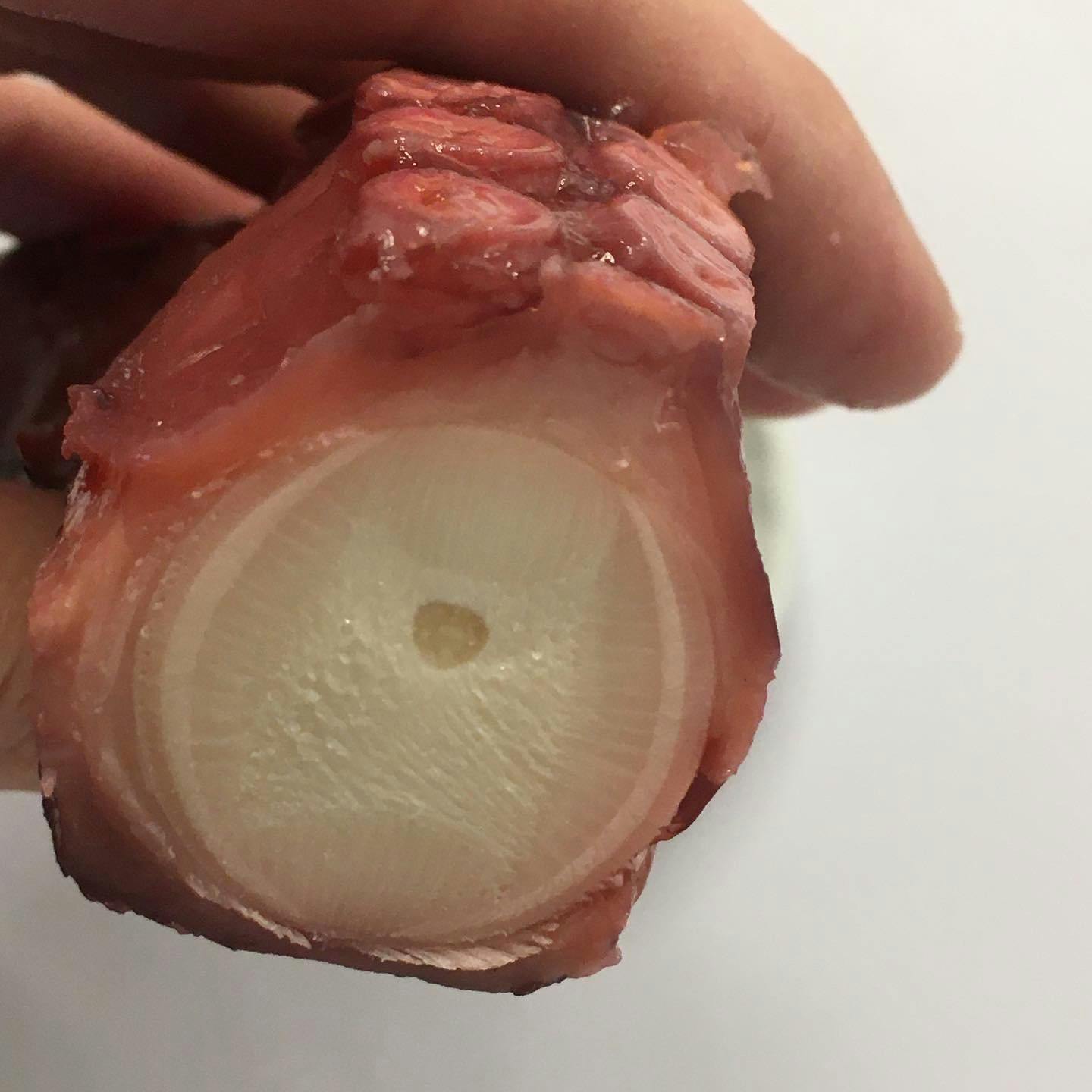
Octopus
This wonderful seafood from the Spanish coast can be prepared in many ways. The common initial cooking method is to boil it in only water until the perfect cooking point is reached, approximately between 30-40 minutes ( depending on the size of the octopus).
Traditionally, in the villages of Galicia, north of Spain, the octopus is beaten with a wooden stick ( copied from dolphins, who use that technique to tenderise the meat and break tough fibres), before cooking it.
Then grab it by the head and immerse it or plunge it out three times before starting the cooking process. This method is still used today; it preserves the beautiful skin of the octopus while cooking it, and then it looks more beautiful on the plate.
The traditional way of cooking was in a copper pot over firewood. Today, for health reasons, we are not allowed to cook in copper pots anymore, so in professional kitchens, this material is only being used for presentations of sauces and dishes. Still, there are some traditional lovers who, when they cook octopus, put a copper coin in their pots to emulate this tradition, even though there is no proof that it has any kind of impact on the finished product.
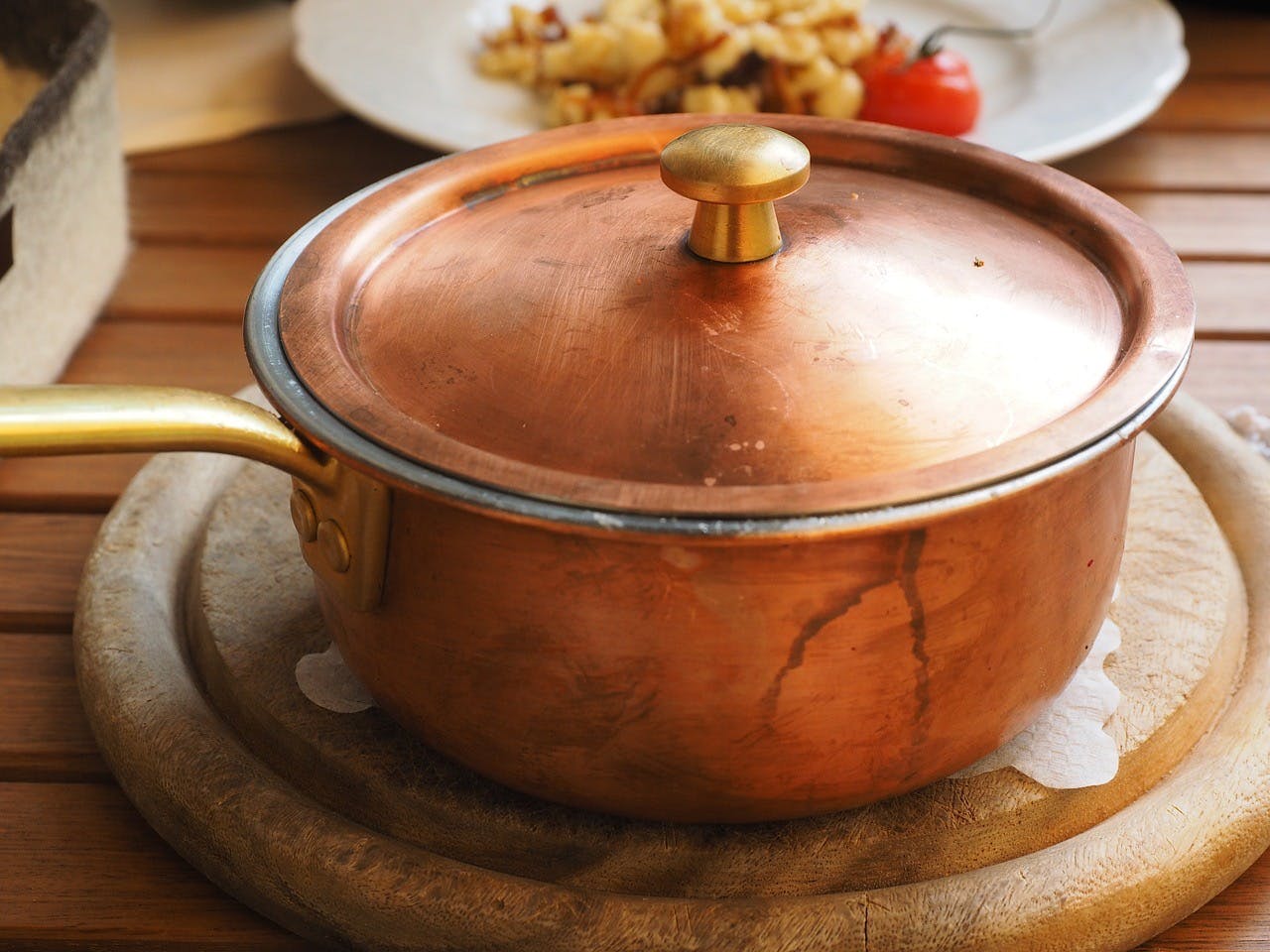
Traditional Pot
We also have to talk about its great nutritional value. Its low-fat content and its protein value make octopus an ideal healthy food to introduce into all kinds of diets. I have to say that one of my favourite ingredients to use in the kitchen is one of my weaknesses come mealtime. In the market, we can find it in different ways: Fresh in fishmongers, Frozen Raw, cooked in different ways, canned and vacuum-cooked fresh or frozen.
Summer is coming, and after all this time spent at home in confinement, I think we have all taken on a few extra pounds, and we need to fill our diet with healthy foods with little fat. There are innumerable ways to prepare the octopus, and I have decided to show you one of my favourites. Octopus salad is very popular in most Spanish bars and restaurants.
Octopus Salad Recipe
It is a very easy recipe to make, tasty, fresh and fast.
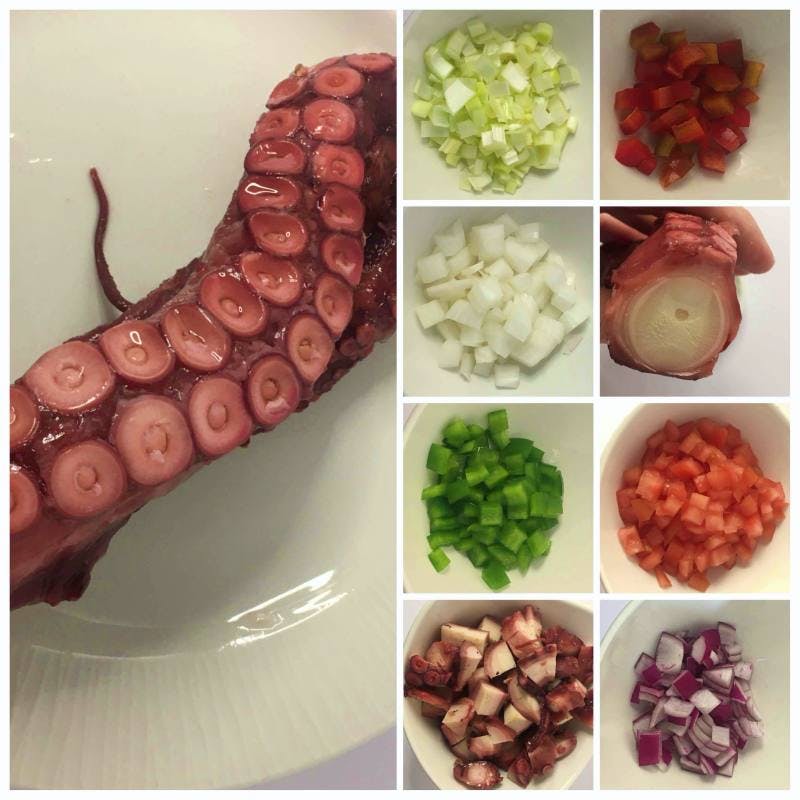
Ingredients ( 2 pers.)
- 2 Cooked OCTOPUS Legs.
- 2 Peppers ( 1 Red / 1 Green)
- 1 Leek
- 1/2 White Onion
- 1/2 Red Onion
- 1 Tomato
- Coriander
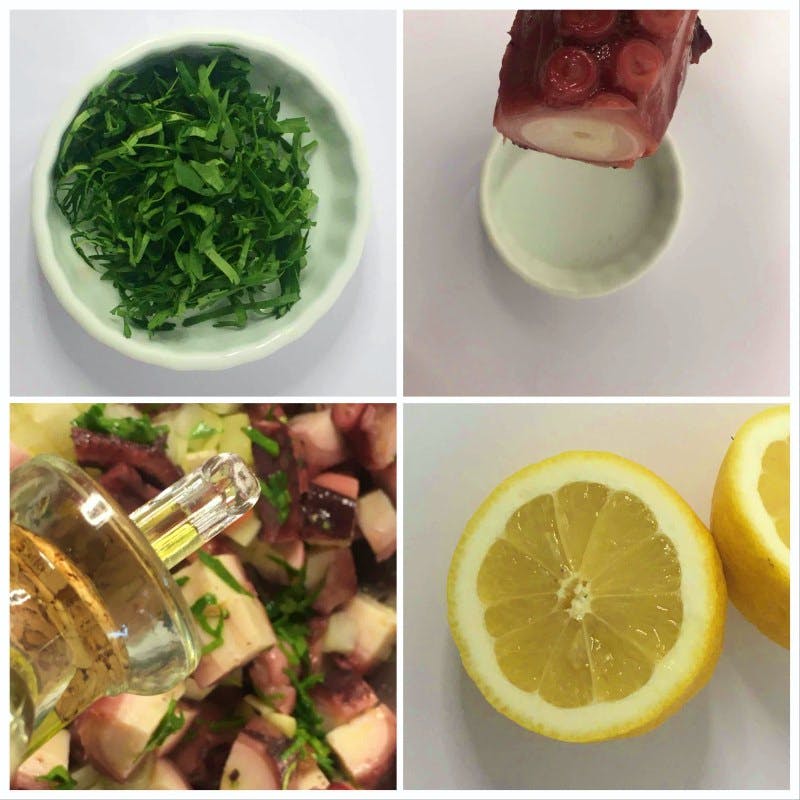
For the Vinaigrette
- Lemon juice
- White Wine Vinegar
- Extra Virgin Olive Oil
- Salt.
Preparation
- Dice the vegetables and the octopus.
- Mix them well in a bowl.
- Add chopped coriander and the vinaigrette to your liking.
- Mix again and ready to serve.
Well, friends, I hope you liked this article and above all that you are looking forward to preparing this traditional Spanish recipe so tasty and fresh, and share it with your friends and family.
I would also like you to share your octopus salad photos that you have prepared, comments, as well as suggestions for all kinds of recipes for this wonderful product from the sea, on our Facebook site.
Enjoy the Summer!


